Film Review - Festen

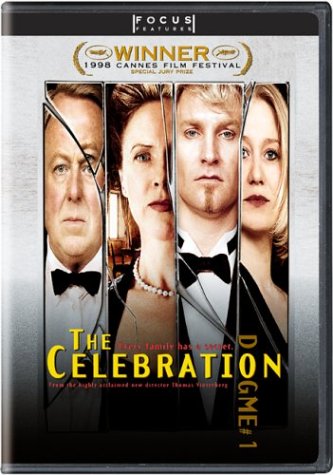
'Festen', translated into English as The Celebration, is a Danish Film produced by Nimbus Film. Directed by Thomas Vinterberg, it was the first film to be made under Dogme 95, and was inspired by a hoax broadcast on a Danish Radio Station.
The film tells the story of a family gathering to celebrate their father's 60th birthday. At the dinner, the eldest son publicly accuses his father of sexually abusing both himself and his twin sister (who has recently committed suicide).
Festen contains many different themes within the story line including racism, abuse, love, and the relationships within a family. The combination of comedy and tragedy is portrayed with a sense of ambiguity resulting in the audience being left unsure of the intended tone throughout.


As the film was made under Dogme 95 it meant that there were specific production and narrative limitations in several areas of the films production. Dogme 95 protests against expensive Hollywood-style film-making, therefore banning post-production techniques such as sound editing. Dogme 95 also required the entire film to be shot on a hand-held camera. Festen was shot on a Sony DCR-PC7E Handycam on standard Mini-DV cassettes. The outcome of the cinematography was deliberately 'amateur', sometimes 'clumsy' in appearance and the desired 'family home movie' feel was achieved. 
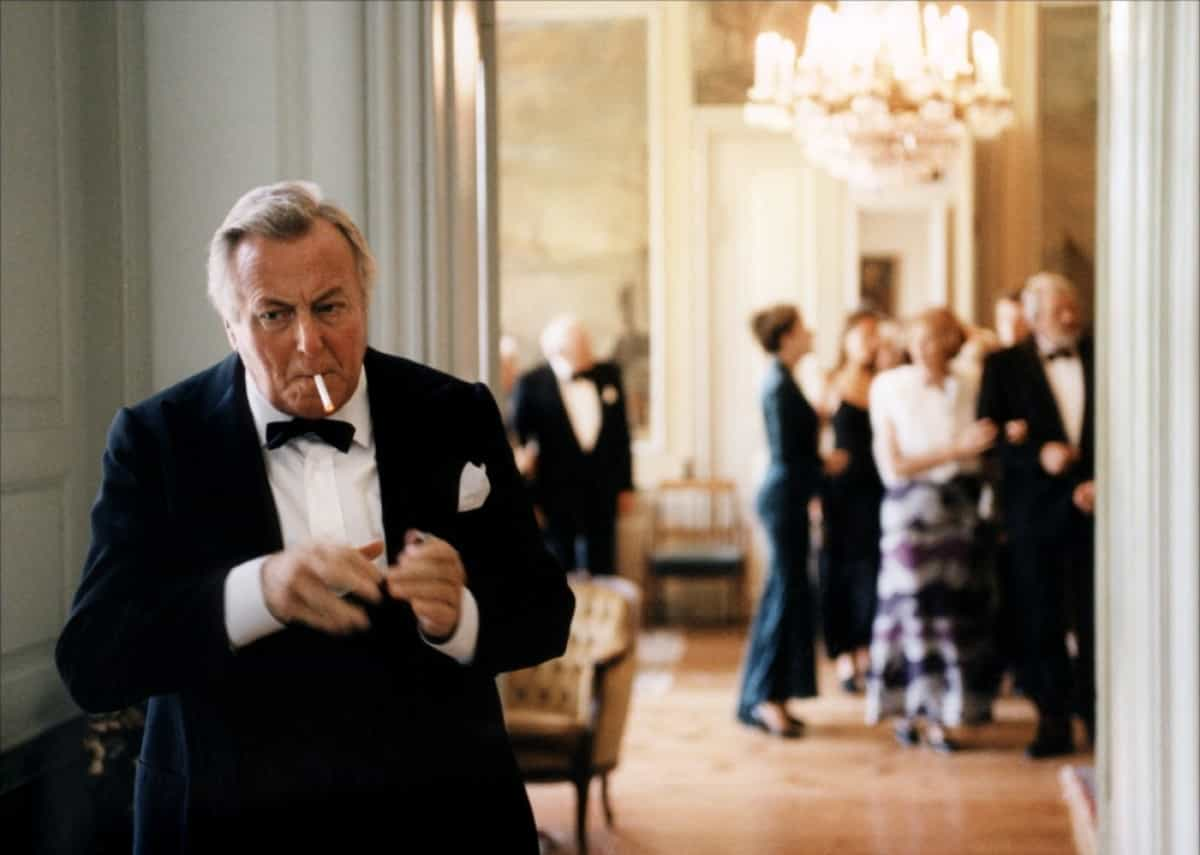

The script is in itself a work of art; full of mystery and uncertainty, therefore drawing the audience into and emotional experience full of tension and apprehension throughout the film. The story attempts to dissuade and confuse everything the viewer thinks about the characters and how the plot will unfold, resulting in a lavishly unpredictable plot.
"Every family has a secret"
I personally enjoyed the film, although the language and some scenes were very strong at times and possibly inappropriate. However I liked the fact that the film was unpredictable, therefore compelling and riveting entertainment for the viewer.

See trailer here: Festen 1998

Comments

Popular posts from this blog

The Hobbit - Defining the Look

A look into the use of lighting and colour to create emotion. Originally published in 1937, The Hobbit was written by J. R. R. Tolkien. It has since been made into a Trilogy by the film director Peter Jackson consisting of: The Unexpected Journey The Desolation of Smaug The Battle of the Five Armies What is most notable about these films is that they are very different to the Lord of the Rings Trilogy. Although set in the same universe of Middle Earth, there is a tangible contrast between them.  The Hobbit, some might say, is lighter, funnier and more suitable for children when compared with The Lord of the Rings. This being said, J. R. R. Tolkien did write the book for children and it was aimed at young readers around the ages of 9 and 10. One difference, for example, is the use of lighting and colour - which is used as a n extension of a particular character -  to provoke an emotional response from the audience. In general, the film is brightly lit,...

Gasman - the Importance of Trust between Characters

Gasman is a short film made in 1998 by Lynne Ramsay about a man who lives two lives. The film is shown mainly through the eyes of his daughter, in an innocent but hard-hitting way. It's the Christmas season. With her mom's help, Lynne, a girl of perhaps eight, dresses up; her younger brother Steven plays with a toy car. The children leave with their dad, who's affectionate with them. They walk down a railroad track where an unkempt woman waits with two children, about the same age as Lynne and Steven. The children go with them. They're all headed to a holiday party at a pub. Lynne notices that the girl acts all too familiar with her dad. What's going on?   Plot Summary - IMDB The film has an observant feel to it, like the camera itself is a 'third person' watching the plot unfold - sometimes from a distance and other times up close. The camera is mostly hand-held, free in a documentary style. It seems that the camera was left rollin...

STORYBOARDING: The Chess Player

A few months ago I was presented with the opportunity to create the storyboards for a student project at the University I had graduated from. Having always storyboarded my own projects, and used to drawing what I could see inside my own mind, I jumped at the chance to help visualise someone else's film. Everybody sees things differently. We imagine, we visualise in different ways. Maybe because our brains are wired differently, maybe because we all rely on different experiences or the things we've read. A wide shot to one person might be a close to another; or someone might prefer a high-angled birds eye view, whilst another a fish-eye lens effect. There are endless ways to visualise a story and we are all unique when it comes to this. So being tasked with aiding in the visualisation of someone else's film is by no means an easy feat. One must be able to see inside the director's mind, understand their vision and translate that into something that will reach and ...